
Cabling
Low-voltage wiring for data, security, AV and phones
Data, cameras, door access, intercoms, speakers and phones all run on low-voltage cable, and most buildings end up with a different contractor for each. Planning the pathways, labelling and documentation for all of it together is cheaper, tidier and much easier to live with later.
At a glance
- Data, security, AV and communications cabling
- Rough-in for new builds and renovations
- One labelling scheme and one set of drawings
- Line-voltage power left to licensed electricians
What counts as low voltage
Low voltage is the cabling that carries data, signal and small amounts of power rather than building power: network cable, camera and access control wiring, intercom and doorbell runs, speaker wire, coax and fiber. It's what we install every day.
Line voltage, meaning the 120-volt circuits, receptacles and panels, is different work. It's done by a licensed electrical contractor, never by us. When a door lock or an access point needs a new circuit, an electrician does that part, and we work alongside them so the circuit is there when the device goes up.
Why plan it all together
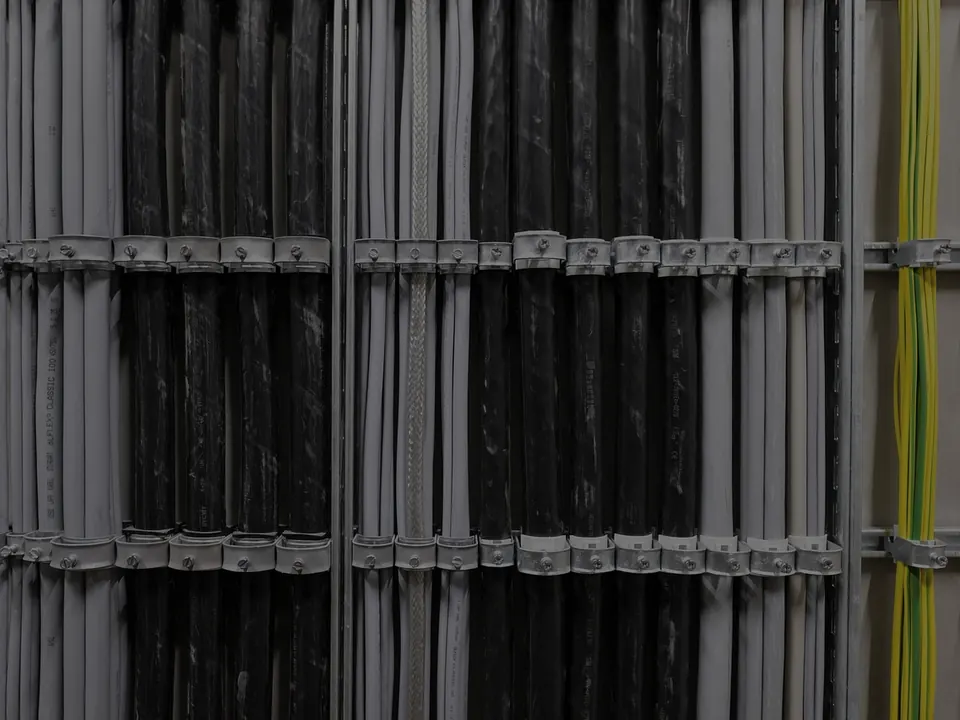
When the network, the cameras and the access control each come from a different trade, each one pulls its own cable through the same ceiling, labels it its own way, and leaves its own drawings, if any. Five years later nobody can tell which grey cable goes where.
Planned together, the systems share pathways and supports, every cable is labelled to one scheme, and you get one set of as-built drawings. If we installed it, changes later are a call to us, and we already know the building.
New builds and renovations
The cheapest time to run cable is before the drywall goes up. We work to your general contractor's schedule: rough-in with the other trades, boxes and sleeves where they're needed, then trim-out and testing once finishes are done. You get a single price for the low-voltage scope rather than five separate quotes to reconcile.
Standards and documentation
Network cabling is installed to TIA standards and tested with results you keep. Security and AV cabling follows the manufacturer's requirements for each system. Every run is labelled at both ends, and the hand-over includes drawings showing what goes where.
What you get
Included as standard unless it says otherwise. Add-ons are priced separately and named as such.
- Data and networkCat6 and Cat6A runs, racks and patch panels. See structured cabling.
- FiberBackbone and building-to-building links.
- SecurityCameras, access control, door contacts and intercoms.
- Audio and videoSpeakers, paging, displays and meeting rooms.
- PhonesNetwork drops for desk phones and paging gateways.
- WirelessCabled access point locations and cell booster coax.
- PathwaysSupports, sleeves and fire-stopping at penetrations.
- DocumentationOne labelling scheme, test results and as-built drawings.
- Workmanship warrantyIncluded: 1 year from install. Anything our installation caused is fixed at no charge. Equipment carries the manufacturer’s warranty.
The process, start to finish
Every job follows the same shape, so you always know where you are in it.
Walkthrough
We list every system that needs cable, with locations and pathways.
Design & quote
You get one scope and one price for all the low-voltage work.
Rough-in
We pull cable and set boxes before the drywall goes up, on the GC's schedule.
Trim-out
Once finishes are done, jacks, panels, devices and racks are terminated.
Test
Data runs are certified and every other system is tested end to end.
Hand over
We hand over the labelling, test results and drawings.
Want this scoped for your site?
Call, or text a photo of the space. You get a straight answer on what the job involves.
Before you call
Do we need an electrician as well?
For the low-voltage cabling itself, no. Anything on 120-volt power, such as new circuits, receptacles or panel work, is done by a licensed electrical contractor. We work alongside them so their part lands at the right time.
Can you work alongside our general contractor?
Yes. Most of our new-build work is on a GC's schedule. We attend site meetings, rough in with the other trades and come back for trim-out.
Can you take over cabling another contractor started?
Usually. We test and label what's there first, then quote to finish or fix it, and tell you if parts are better replaced than rescued.
Do you only do commercial work?
Mostly. We also wire homes for network, cameras and AV, especially during renovations.